







Whats the real cost of contaminated hydraulic fluid?

You spec the right pump, size the cylinder properly, pick a quality filter, but the system still degrades faster than expected. What’s causing downtime, loss of performance, or catastrophic failure?
Nine times out of ten, it’s contamination in hydraulic systems.
This article breaks down contamination control in hydraulic systems, based on real-world practices aligned with ISO 4406, the recognised cleanliness code. It’s written for engineers who are tired of theory and want real-world clarity on contamination control.
Why hydraulic contamination control actually matters
Contamination in hydraulic systems is one of the top causes of:
- Component wear and tear
- Abrasion and cavitation
- Seal damage and leaks
- Premature pump and valve failure
- Sludge, varnish, and oxidation buildup
- Erratic cylinder motion or stiction
Hydraulic oil isn’t just a power transfer medium. It’s the lifeblood of the system, and when it’s full of contaminants, everything starts to go sideways.

Common types of hydraulic contamination
Here’s a breakdown of what you’re actually up against:
- Solid particles – dust, dirt, machining debris, metal shavings
- Water contamination – often from condensation or poor storage
- Air – micro bubbles causing cavitation and reduced lubrication
- Sludge & oxidation – caused by fluid degradation over time
- Microbial growth – especially in systems where moisture is poorly controlled
You’ll hear terms like particulate contamination, fluid contamination, or moisture contamination, but they’re all pointing at the same core problem: stuff getting into your fluid that shouldn’t be there.

Where contamination enters the hydraulic system
Most people assume contamination starts inside the system. But in reality, a lot of it comes from:
- New oil – Yes, fresh oil can already be contaminated
- Hoses and fittings – assembly debris or leftover machining particles
- Worn seals – letting air, water, and particles in
- Reservoirs – poorly sealed or vented ones are magnets for airborne particles
- Cylinder rod wear – external dirt scraping in past worn wipers
- Improper fluid storage – drums left open, no desiccant breathers, etc.
Contamination control in hydraulic systems: Start with ISO 4406
ISO 4406 provides a standardised way to measure fluid cleanliness, which is critical for tracking contamination levels. It uses a three-part code based on the number of particles per millilitre greater than:
- 4 microns
- 6 microns
- 14 microns
For example, a cleanliness code of 18/16/13 tells you the particle count per ml across these sizes. The lower the numbers, the cleaner the oil.
Cleanliness targets depend on the system’s sensitivity:
|
Component Type |
Recommended ISO Code |
|
Servo valves |
16/14/11 or cleaner |
|
18/16/13 |
|
|
Piston pumps & motors |
17/15/12 |
|
19/17/14 |
How to limit contamination in hydraulic systems
Here’s what actually works in the field:
1. Proper filtration setup
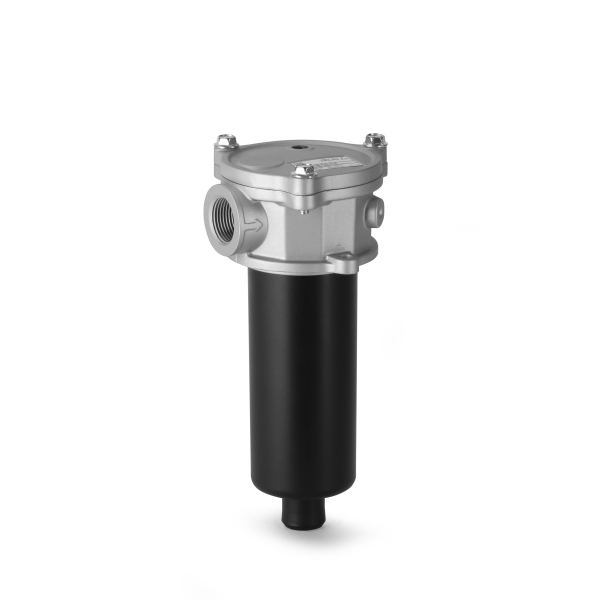
- Use pressure filters, return line filters, and offline filtration units
- Select filter elements by β-ratio, not just micron size
- Match filter placement to critical components (e.g., install upstream of servo valves)
2. Filter new oil before use
- Never assume new oil is clean, filter to the target ISO code before filling the reservoir
3. Seal integrity
- Replace wiper seals on cylinders at the first sign of wear
- Use desiccant breathers on reservoirs
- Ensure cap ends and rod seals are in good condition
4. Routine oil analysis
- Send samples for particle count, water content, viscosity, and oxidation index
- Set up thresholds based on OEM specs or ISO 4406 targets
5. System flushes
- Do a full system flush when contamination levels are consistently out of spec
- Use dedicated flushing rigs, don’t run the system with contaminated oil and hope for the best
Effects of contamination on system performance
If you’re seeing the following, it’s probably fluid contamination:
- Erratic actuator motion
- Valve sticking or drifting
- Overheating hydraulic pumps
- Unexplained leaks around fittings
- Faster degradation of seals and hoses
- Increased downtime and unexpected maintenance
Contaminants from hydraulic components, especially metal particles from pumps or cylinders, create a snowball effect. Once wear starts, debris spreads and amplifies the damage across the system.
Filtration products: choosing what fits your system
Don’t default to the cheapest filter. Choose based on:
- Flow rate
- β-ratio performance
- Operating pressure and temperature
- Ease of maintenance/changeout
- Compatibility with system fluid
It’s worth spending a bit more on quality filter elements if it means extending the lifespan of your hydraulic pumps, valves, and cylinders.
Key metrics to track
- ISO 4406 code – baseline and ongoing fluid cleanliness
- Contamination levels by type – solid, water, microbial, air
- Filter ΔP (differential pressure) – to track clogging and flow restriction
- Seal failure rate
- Pump and valve wear patterns
- System efficiency and downtime hours
FAQs: Contamination control in hydraulics
Q: Can contamination be fully eliminated?
No, but you can limit contamination enough that it doesn’t harm the system. That’s the whole point of ISO 4406 targets.
Q: Is water the most dangerous contaminant?
Depends. Water contamination causes corrosion, microbial growth, and reduces lubrication. But hard particulates are usually the most aggressive in causing wear.
Q: How often should filters be changed?
Base this on differential pressure readings and oil analysis results, not time intervals.
Q: Should I flush the system every time I change the fluid?
Not always. Only flush if there’s evidence of serious contamination, oil degradation, or if components have been replaced.
Final thoughts
Hydraulic contamination control is not a checkbox, it’s a continuous strategy. Every fitting, every seal, every filter choice has a knock-on effect across the whole system.
Use ISO 4406 as your guide, not just for compliance but for real gains in system lifespan, performance, and reliability. Control the contamination, and your hydraulic system will run cleaner, longer, and more efficiently.